
Understanding Lean Ground Beef: What do 90/10, 80/20 and Other Labels Mean
If you’ve ever stood in the meat aisle staring at packs of ground beef labeled “90/10” or “80/20” and wondered what those numbers really mean, you’re not alone. The different ratios can be confusing, especially if you’re trying to make a healthier choice or cook the perfect burger. Let’s break it down so you can make the best decision for your next meal.
What Do the Numbers on Ground Beef Labels Mean?
The numbers on ground beef packaging, such as 90/10 or 80/20, refer to the ratio of lean meat to fat. The first number represents the percentage of lean meat, while the second number represents the percentage of fat. So, a pack of ground beef labeled 80/20 means it contains 80% lean meat and 20% fat.
These ratios help you determine the nutritional content of your ground beef. If you’re looking for a leaner option with less fat, you’ll want to choose a higher lean percentage.
Lean Ground Beef vs. Regular Ground Beef
Ground beef is typically categorized into a few standard ratios:
73/27 (Regular Ground Beef): This contains 27% fat. It is often used for burgers but can be greasy.
80/20 (Ground Chuck): A popular choice for burgers and meatloaf.
85/15 (Lean Ground Beef): This is a leaner option that is used for dishes like tacos, meatballs, and casseroles.
90/10 (Extra Lean Ground Beef): With just 10% fat, this is one of the healthier options. It’s perfect for those looking to reduce fat intake but still enjoy ground beef in recipes like chili, stuffed peppers, or pasta sauce.
93/7 or 95/5 (Super Lean Ground Beef): These ultra-lean options are great for the health-conscious.
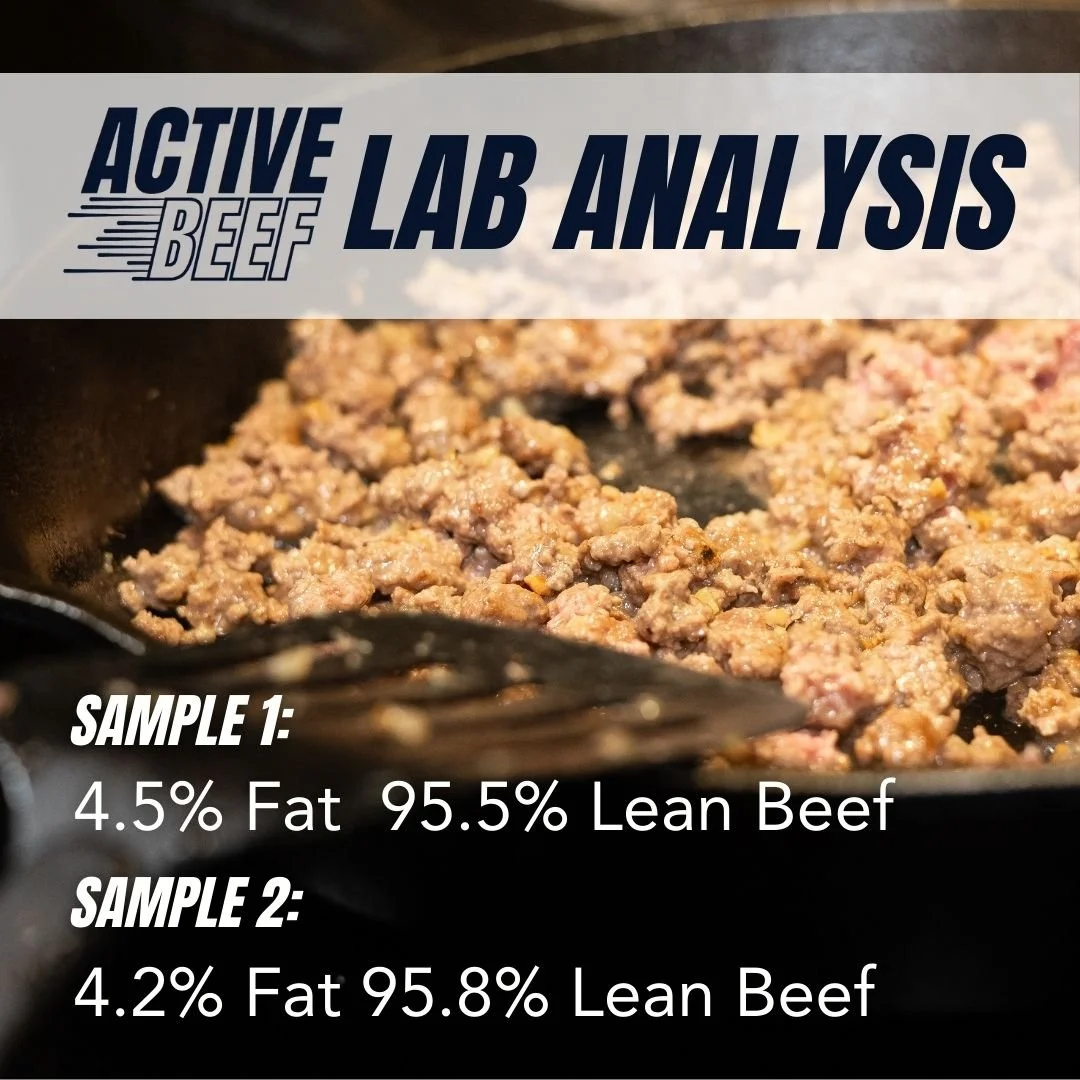
ActiveBeef is lab verified to be 95/5 or better!
Choosing the Right Ground Beef for Your Recipe
Now that you know what the numbers mean, let’s talk about which ground beef is best for different types of recipes.
Tacos and Chili: Leaner beef like 90/10 or 93/7 is great for these dishes since you typically cook it with other ingredients like tomatoes and seasonings that add moisture.
Casseroles and Stuffed Peppers: These dishes do well with lean ground beef since they are often mixed with other moist ingredients like cheese, sauce, or vegetables.
Health Considerations of Lean Ground Beef
If you’re watching your fat intake or looking for a healthier protein source, lean ground beef is a great option. Here are a few benefits of choosing leaner cuts:
Lower Saturated Fat: Reducing fat intake, especially saturated fat, can help support heart health.
Fewer Calories: Leaner ground beef has fewer calories per serving, making it a better choice for weight management.
More Protein per Serving: With less fat, lean ground beef provides more protein per ounce, which is great for muscle maintenance and overall nutrition.
Tips for Cooking Lean Ground Beef
Since lean ground beef has less fat, it can dry out quickly. Here are some tips to keep it tender and flavorful:
Don’t Overcook It: Since there’s less fat to keep the meat juicy, lean ground beef can dry out quickly. Cook it just until it reaches an internal temperature of 160°F.
Add Moisture: Consider mixing in broth, tomato sauce, or sautéed veggies to keep it juicy.
Use Gentle Cooking Methods: Avoid high-heat cooking that can dry out the meat quickly. Instead, use slow cooking, simmering, or mixing with other ingredients.
The Bottom Line
Understanding lean ground beef labels can help you make smarter choices in the kitchen. Whether you’re looking for the perfect blend for a juicy burger or a leaner option for a healthier meal, knowing what those numbers mean will help you shop with confidence. Next time you’re at the grocery store, you’ll know exactly what to look for!
